
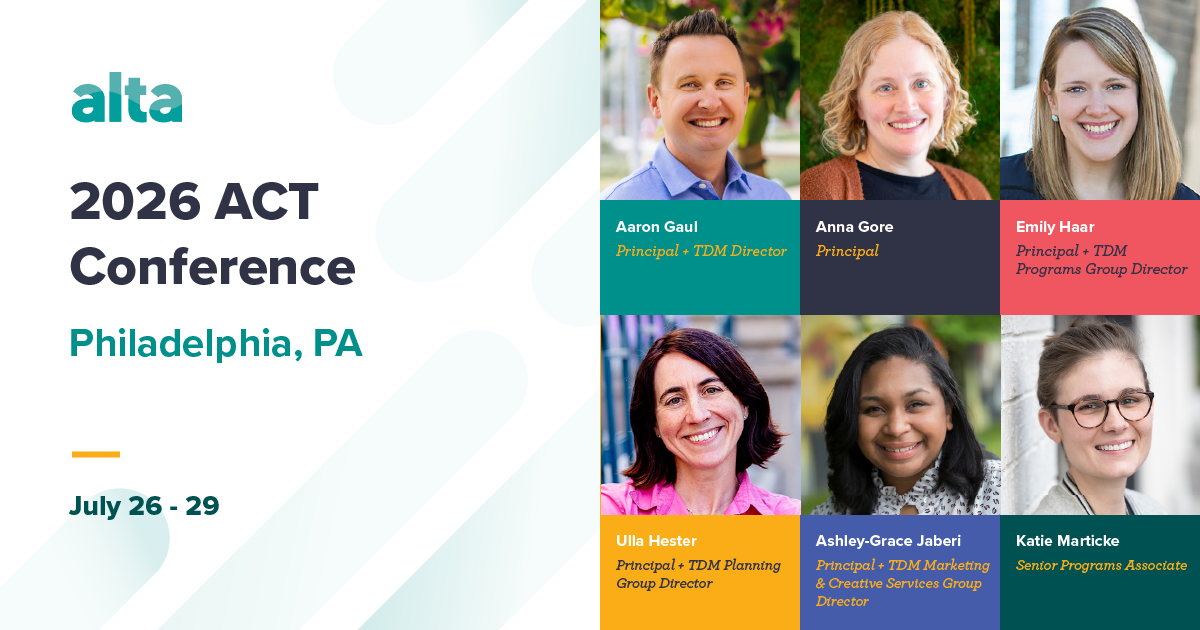
Join us for the 2026 Association for Commuter Transportation (ACT) International Conference, the country’s premier gathering of Transportation Demand Management (TDM) and mobility professionals. We’re excited to be in Philadelphia with more than 650 attendees from across the U.S. and around the world, collaborating with industry leaders to shape the future of mobility.
This year’s conference will host inspiring keynote speakers, immersive learning opportunities, technical tours, networking events and conversations focused on the evolving role of TDM in creating more connected, sustainable and equitable communities.
We’re proud to contribute to the conference program with multiple speakers presenting across a range of topics, including major event mobility planning, transportation wallet programs, traffic safety campaigns, and innovative funding strategies for TDM. Join our team members as they share lessons learned, practical solutions, and forward-thinking approaches from projects across North America.
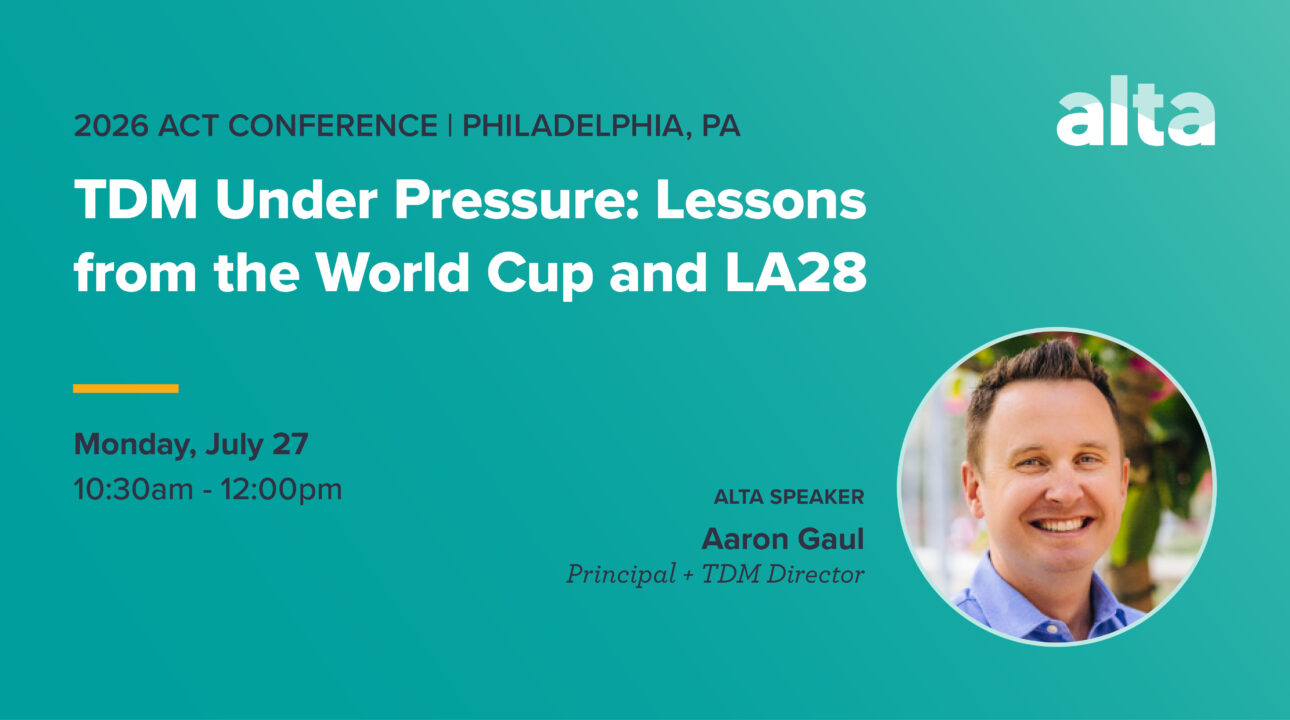
Mega-events put TDM in the spotlight, requiring agencies and partners to turn ambitious plans into real-world results under intense scrutiny. This interactive panel brings together practitioners leading mobility efforts for the 2026 FIFA World Cup and LA 2028 Olympic and Paralympic Games to share lessons learned, unexpected challenges, and strategies that have delivered results. Through a live audience Q&A, attendees will explore stakeholder coordination, communications, and pilot programs, while gaining practical insights that apply not only to mega-events but also to everyday TDM challenges, major construction projects, and regional disruptions.
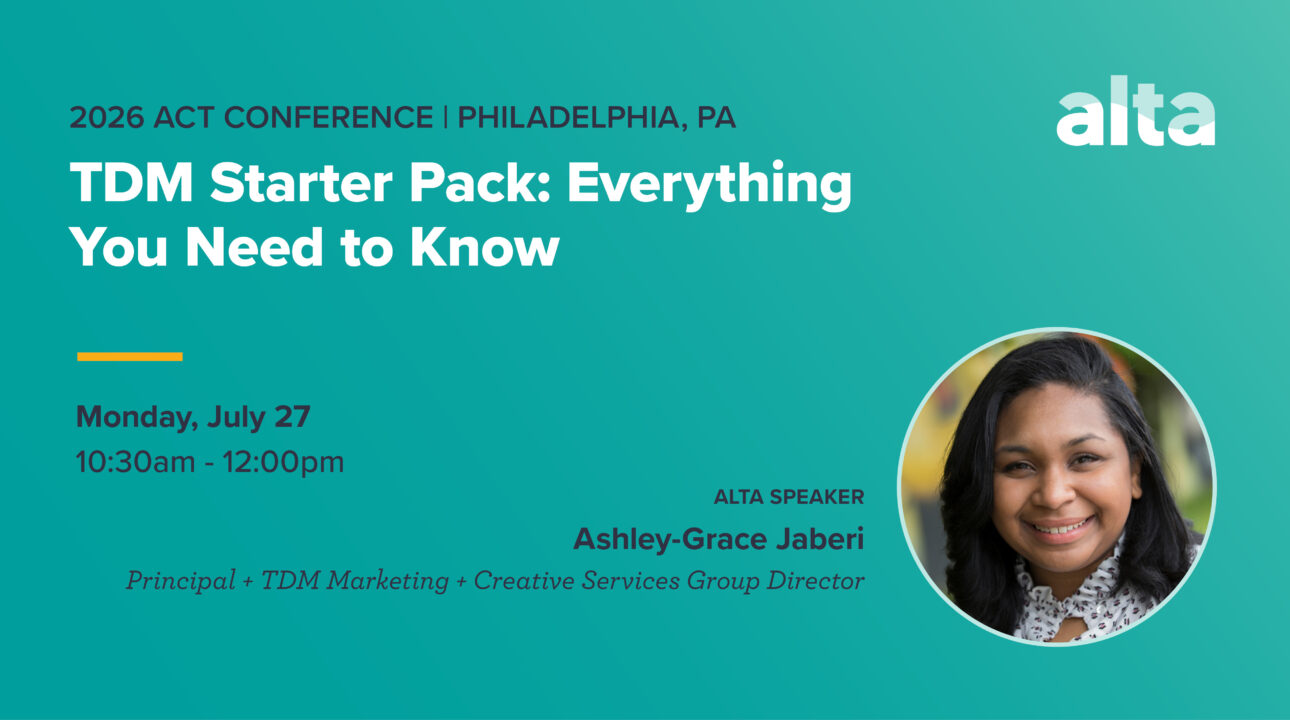
The TDM Starter Pack is a practical introduction to Transportation Demand Management for new and emerging practitioners. Using the core pillars of TDM—planning, programs, policy, marketing, communications, incentives, pricing, data, and technology—this session explores how strategies work in practice and why they matter. Moderated through the lens of someone actively building their TDM expertise, the discussion will tackle common questions, share real-world examples, and make technical concepts accessible without oversimplifying them. Attendees will leave with a stronger foundation in TDM and greater confidence engaging in planning, program design, and evaluation.
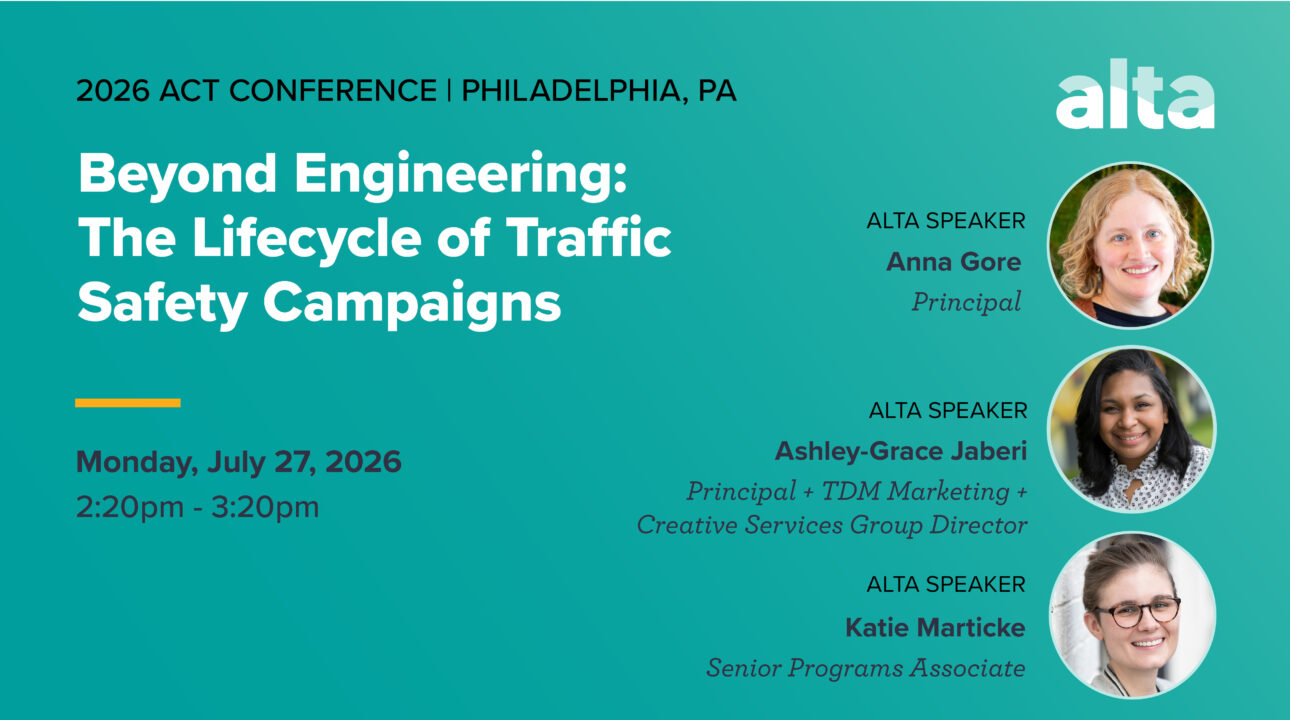
Building safer streets does not automatically produce safer travel behaviors. This session explores the role of safety communications and community engagement across the lifecycle of a Vision Zero project. As SS4A grants encourage communities to pair engineering with outreach and education, behavior-focused campaigns are emerging as important tools for shaping how people interpret infrastructure, navigate multimodal networks, and make safer decisions. Drawing from public- and private-sector examples from Roanoke, Modesto, and Atlanta’s Atlantic Station, panelists will examine how timely, data-driven campaigns can complement engineering and enforcement while advancing broader mobility goals.
Learn how Northeast Transportation Connections (NETC) redefined the TMA model through diversified funding and strategic partnerships. This session highlights collaborations with CDOT, RTD, and local cities that have created sustainable TDM programs across Denver’s northeast region. From Tolling Equity and shuttle operations to active transportation initiatives, NETC’s approach aligns partner missions, fills service gaps, and builds resilience through shared investment. Participants will explore a replicable model for organizations seeking to strengthen long-term impact through creative funding, cross-agency coordination, and community-driven innovation.
Public agencies are rethinking how transportation benefits can better serve residents facing economic and housing insecurity. This session highlights how the Portland Bureau of Transportation and King County Metro are evolving universal mobility programs to expand choice, improve access, and build trust. Learn how community partnerships, resident-centered outreach, and open-loop payment technology are reshaping equitable transportation benefits and informing the future of reduced-fare and multimodal mobility programs.